As exam season is fast approaching, it’s a good time to remind learners of some key issues and approaches for revision:
I have had a few people mentioning ‘revision books’, ‘seneca’ and sites where you can use their summaries/cards etc to revise. I have to stress that none of the above are recommended, none are actual ‘revision’, and there are important issues with using/relying on any or all of the above:
*it is really important to note that the detailed information in the weekly readings/textbook is required to meet the syllabus. If you use a ‘revision’ resource where the information is reduced down, where detail is removed, where topics are summarised, then you run the very real risk of removing important details. GCSE and IGCSE exams ask for a very wide range of information, down to the minute detail (as an example, in Psychology, the exam papers often ask how many participant were used in a specific study, to the actual number (ie Asch had 123 participants)
*revision is not about turning more information into less or making it more concise
*revision is about … i) repeated recall of what you have learned, to make those memories ‘stickier’ (which is done through recall such as doing past paper questions, completing the crossword you made as a study skill, playing the boardgame you made, teaching your sibling about a topic over tea(from memory) and so on) and ii) filling in any gaps of knowledge through laying down new memories by using the information in new and impactful ways (there are many useful, creative and proven ways – from teaching someone else, to writing lyrics to a melody, to creating dinner time placements). Revision means reinforcing your learning through repeated recall and gap filling so that you create long-term, embedded memories (and thus revision is most productive when you create and use your own materials)
*if you use a revision tool/aid/book/quiz/card that someone else has created, you are losing a good chunk of the benefit (because some of the learning comes from the creation aspect when you yourself make these things and then some comes from using these things that you made)
*if you ignore the detail, you are reducing your opportunity to add vital information to an exam answer that could make a difference to pop you over a grade boundary
*practicing recall of information (and then filling in gaps) is a more effective method of revision than just going over the information time and time again (instillation)
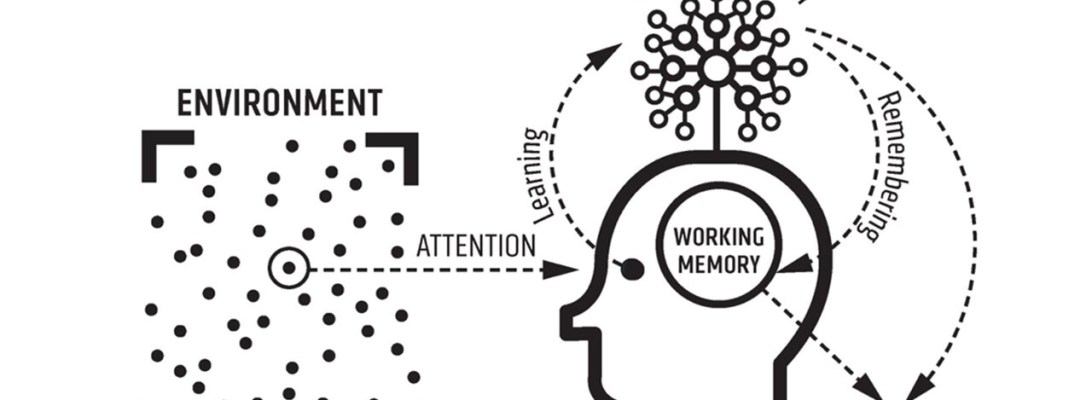
*revising is an activity that needs to be done on an ongoing basis, throughout the months, so you are not forgetting the information you learn as time goes on … just because the information went in to your  , doesn’t mean it will stay in your … you have to work hard at getting it in there (study skills) and work just as hard at keeping it stuck and staying put in there (revision skills)!
Illustrations and words
Research has shown that studying and revising with words and pictures doubles the quality of responses by students. This is known as ‘dual-coding’ because it provides two ways of fetching the information from our brain. The improvement in responses is particularly apparent in students when asked to apply their knowledge to different problems. Recall, application and judgement are all specifically and carefully assessed in public examination questions.
Retrieval of information
Some retrieval practice involves students to come up with answers to questions. The closer the question is to one you might see in a real examination, the better. Also, the closer the environment in which a student revises is to the ‘examination environment’, the better. Students who had a test 2–7 days away did 30% better using retrieval practice than students who simply read, or repeatedly reread material. Students who were expected to teach the content to someone else after their revision period did better still. What was found to be most interesting in other studies is that students using retrieval methods and testing for revision were also more resilient to the introduction of stress.
Ebbinghaus’ forgetting curve and spaced learning
Ebbinghaus’ 140-year-old study examined the rate in which we forget things over time. The findings still hold power. However, the act of forgetting things and relearning them is what cements things into the brain. Spacing out revision is more effective than cramming – we know that, but students should also know that the space between revisiting material should vary depending on how far away the examination is. A cyclical approach is required. An examination 12 months away necessitates revisiting covered material about once a month. A test in 30 days should have topics revisited every 3 days – intervals of roughly a tenth of the time available
As with lots of things in life, the effort you put in = what you get out. And there are no real “short cuts” to good revision.
And finally, a recommended watch! https://www.youtube.com/watch?v=BRKHcySu_Fw
Hoping everyone has a successful exam season! Kate